
Cat Nails: Trimming Tips, Care, and Common Problems
Cat nails might seem like a minor detail in the grand scheme of feline health, but they play a much bigger role than most owners realize. Overgrown nails can curl into a cat’s paw pads, cause pain, lead to infections, and even alter the way your cat walks. Regular nail care is one of the simplest things you can do to prevent unnecessary discomfort for your cat, yet it’s also one of the most commonly skipped grooming tasks. Caring for your cat’s nails may seem intimidating at first, especially if you’re unsure where to start or have postponed the task in the past. Below, we’ll explain the basics of cat nail care and offer helpful guidance to make the process easier and more comfortable for both you and your cat.
Understanding Cat Nail Anatomy
Before you pick up a pair of nail clippers, it helps to understand what you’re working with. Cat nails are retractable, which means your cat can extend them when needed and pull them back when relaxed. Each nail contains a blood vessel and nerve called the quick. Trimming into the quick causes pain and bleeding, so knowing where it is and how to avoid it is essential for a safe and successful trim.
Finding the Quick
In cats with light-colored or translucent nails, the quick is visible as a pink area inside the nail. For cats with dark nails, the quick is harder to see, which makes trimming more challenging. In either case, the safe approach is to trim only the sharp, curved tip of the nail and avoid cutting too close to the paw. If you’re unsure, trimming a smaller amount more frequently is always safer than trying to take off too much at once.
How to Trim Cat Nails
Trimming a cat’s nails is a skill that takes a little practice, but most cat owners can master it with patience and the right technique. The key is to make the experience as calm and positive as possible for both you and your cat.
Choosing the Right Tools
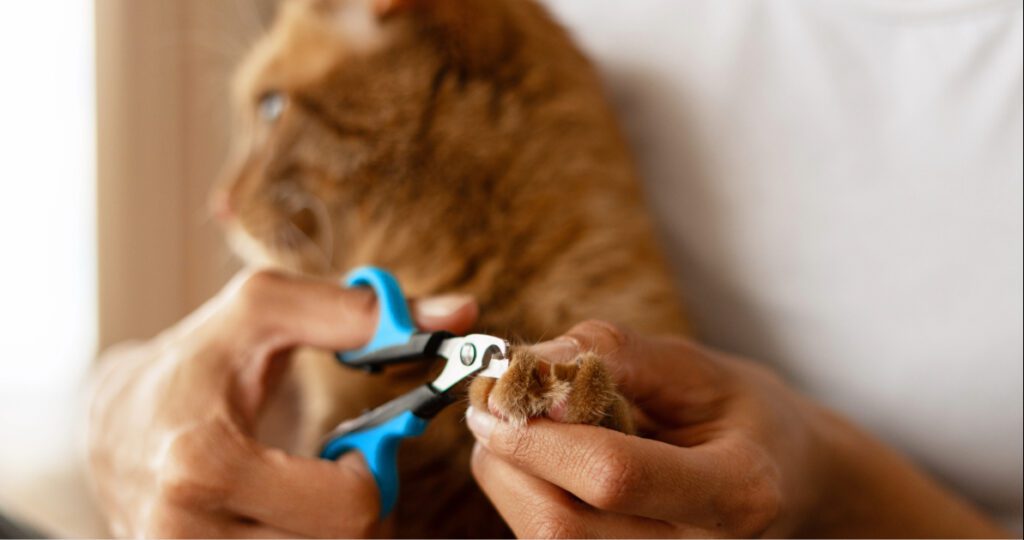
Use clippers specifically designed for cats. Human nail clippers can crush and split the nail rather than cutting cleanly, which is uncomfortable and can lead to nail damage. Cat nail clippers come in scissors-style, guillotine-style, and plier-style designs. Many groomers and veterinarians prefer scissors-style clippers for their precision and ease of use. Keep your clippers sharp and replace them when they start to feel dull.
Getting Your Cat Comfortable
Introduce nail trimming gradually, especially with a younger cat. Start by handling your cat’s paws regularly so they become accustomed to having their feet touched. Practice gently pressing the paw to extend the nails without the clippers present. Once your cat is relaxed with this, introduce the clippers by letting them sniff the tool before using it. Calm surroundings, a relaxed cat, and a confident but gentle approach make all the difference.
Step-by-Step Trimming Process
Gently hold your cat in your lap or on a stable surface. Press the paw pad lightly to extend one nail at a time. Identify the quick and clip only the sharp curved tip, staying well clear of the pink area. Work through one paw at a time, and feel free to take breaks between paws if your cat becomes restless. Offering a treat or praise after each nail can help build a positive association over time. Most cats have 18 nails total: four per front paw plus a dewclaw, and four per back paw.
How Often Should You Trim Cat Nails?
Most cats benefit from nail trims every two to four weeks. Indoor cats typically need more frequent trimming than outdoor cats, whose nails wear down naturally through activity on varied terrain. Senior cats may need more frequent attention, as their nails can become thicker and more brittle with age and may grow more quickly into a curved shape.
Signs That Nails Need Trimming
You don’t need to count the days between trims. Let your cat’s nails tell you when it’s time. If you can hear your cat’s nails clicking on hard floors, they’re overdue for a trim. You may also notice the nails catching on carpet, fabric, or your clothing. In more advanced cases, overgrown nails may begin to curl. Regular handling of your cat’s paws makes it easy to check in on nail length regularly.
Common Cat Nail Problems
Cat nail issues range from minor to serious, and many of them are preventable with consistent grooming and routine veterinary care. Knowing what to watch for helps you catch problems before they become painful or complicated.
Overgrown Nails and Ingrown Nails
When cat nails are not trimmed regularly, they can grow in a tight curve and eventually penetrate the paw pad. This is most common in senior cats and in the dewclaw, which doesn’t contact the ground and therefore doesn’t experience any natural wear. An ingrown nail causes significant pain, limping, and is prone to infection. If you notice your cat’s nail has curled into the pad, contact your veterinarian rather than attempting to remove it at home.
Broken or Torn Nails
A broken or torn nail is a painful injury that can happen when a nail gets caught on something or from trauma. Signs include limping, licking or chewing at the paw, a visibly damaged nail, or bleeding. Torn nails may require veterinary treatment to remove the damaged portion safely, prevent infection, and manage pain. Don’t attempt to pull off a broken nail at home.
Nail Infections
Bacterial or fungal infections around the nail bed can occur, particularly following an injury or in cats with immune system conditions. Signs of a nail infection include swelling around the nail base, discharge, an unpleasant odor, or a cat who is reluctant to bear weight on the affected paw. Nail infections require veterinary diagnosis and treatment, as the appropriate medication depends on whether the cause is bacterial or fungal.
Nail Bed Tumors
Though less common, tumors can develop in or around the nail bed. These may appear as swelling, discoloration, or a change in the shape of the nail or surrounding tissue. Any persistent nail abnormality that doesn’t resolve within a few days warrants a veterinary evaluation, as early detection of nail bed tumors significantly improves treatment outcomes.
What to Do If You Cut the Quick
Even experienced cat owners occasionally nick the quick. If this happens, stay calm. Apply gentle pressure to the tip of the nail with a clean cloth or use styptic powder, which is designed specifically to stop bleeding from nail trims. Bleeding typically stops within a few minutes. If it continues beyond five minutes or your cat seems to be in significant distress, contact Lagniappe Animal Health for guidance on next steps.
When to Let a Professional Handle It
Not every cat or every owner is a good fit for at-home nail trims. Some cats are simply too stressed or too resistant for safe at-home trimming, and that’s perfectly okay. Regular nail trims are part of the grooming services offered at many veterinary clinics and professional grooming facilities. At Lagniappe Animal Health, our team can trim your cat’s nails safely and efficiently during routine visits or standalone grooming appointments. If you have questions about your cat’s nails, notice any abnormalities, or simply want support building a nail care routine that works, give us a call at (318) 255-3303 or schedule an appointment with us today. Your cat’s comfort is always worth it.
